Orca
What is Orca?
Orca is an integrated Online Records Centre Administration system, designed for use in Local Environmental Records Centres (LERCs). It provides a comprehensive species database, metadata store and secure place to hold sites and habitats data. It contains powerful reporting tools, which can be driven by data requests from the My LERC website, provide outputs in a variety of formats, including our unique online mapping system, eMapper. It is fully configurable for the different ways in which LERCs operate, and makes the day-to-day running of a records centre easier, providing among many other things, a sophisticated contact and organisation database for storing information about who supplies and accesses data, automatic quoting, streamlined enquiry handling and invoice generation.
What Orca users think
"Orca has significantly transformed our LERC, enhancing every aspect of our operations. As a small centre managed by a single individual, I cannot emphasise enough how the support from Cofnod and the Orca systems has improved the way we work. This collaboration has created a more efficient and well-utilised record centre, thanks to Orca and its integrated ORS and Sites Manager. I'm very pleased with the results." Carole Boon, Derbyshire Biological Records Centre Officer
"We’ve found Orca to be easy to use and flexible, the technical support has always been quick and helpful and most importantly, it’s saved us time on many of the day-to-day LERC tasks." Kirsty Gamble, Senior Records Officer, Leicestershire and Rutland Environmental Records Centre
“Orca has given me a solid foundation for managing biodiversity data, even as a newcomer to the field. I feel that our data is accurate and secure. The system ensures consistency and integrity, which saves time and reduces errors, making administration straightforward and reliable.” Gemma Bray, Senior Environmental Information Officer, Doncaster City Council
“The Local Records Centre has been a long-time user of Recorder 6, but we recently changed over to the Orca system for our database operation, and we find Cofnod’s system intuitive, versatile and easy to use.” Bob Marsh, Biological Records Officer, Doncaster Local Records Centre
It’s not overstating it to say that the switch to Orca has revolutionised our data enquiry service! The degree of automation now involved has significantly reduced processing time, we’ve had lots of great feedback from customers and we’ve been really impressed with the service received - my only regret is that we didn’t move to the system sooner! Emma Gardener, Principle Ecologist, Herefordshire Local Biological Records Centre
How does Orca work?
Orca uses a Microsoft SQL Server database and operates through a Microsoft Azure cloud server. It contains a series of integrated modules, covering the main aspects of Local Records Centre administration. At its heart is a powerful contacts database, helping to manage interactions with data suppliers and users.
Orca is fully integrated with our Online Recording System, providing a direct feed of data and controlling access to data to Local Experts for verification and defined projects.
One of Orca's primary strengths is its ability to upload large batches of data using its comprehensive import tool, which is integrated with the species dictionary and designation lists supplied to us by the Natural History Museum's UK Species Inventory, and the NBN Record Cleaner rule sets. Imports can range from a handful of records to many hundreds of thousands, providing a range of data checks designed to help improve the quality of the data stored. Each imported dataset is associated with its own metadata and once imported, data can be easy accessed and manipulated using a range of data management tools.
 © Cofnod
Alongside species data, Orca can store spatial data related to sites and habitats, allowing these to be seamlessly integrated with species data through Orca’s reporting tools. Orca can also link directly to our Sites Manager system, which can store a customisable range of contextual information about sites, ideal for handling site management data.
Data Requests are made via the My LERC website, which manages the request process through predefined data packages and customer types.
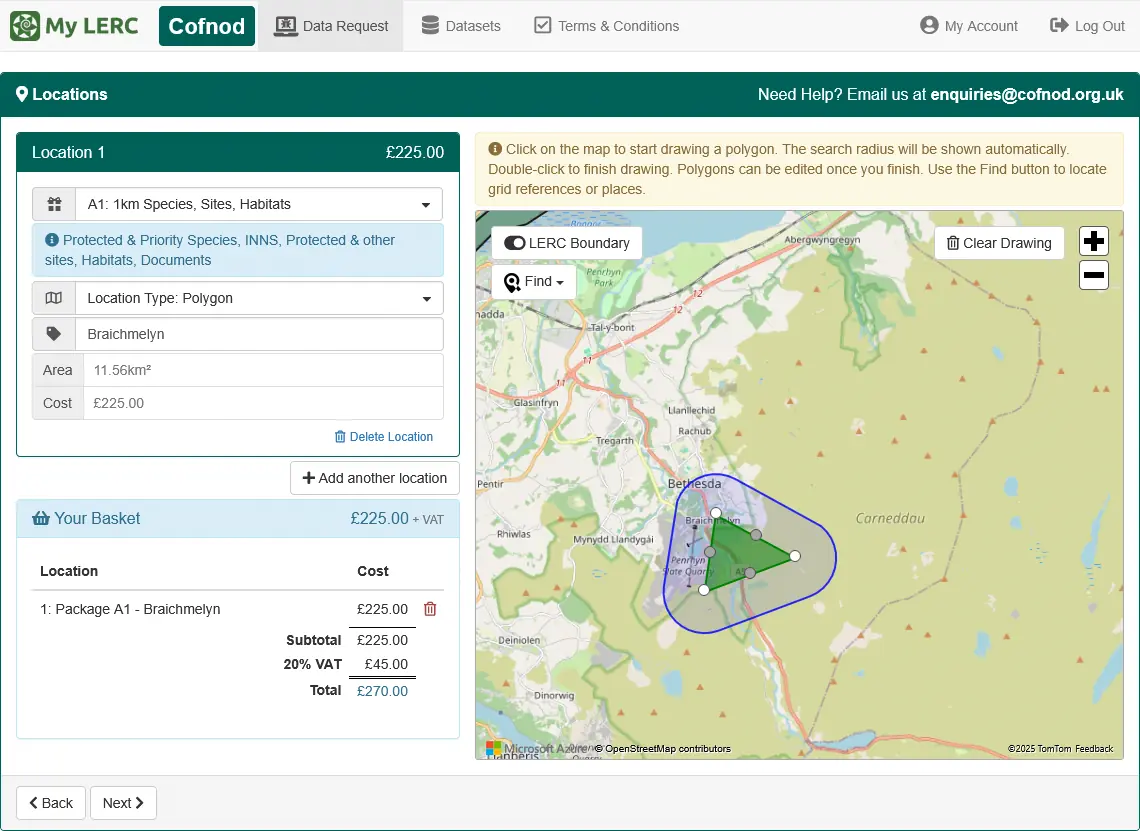 © Cofnod
The requests are quickly processed in Orca to provide rapid turnarounds, supplying data using our online mapping tool eMapper. This gives users a virtual GIS experience, allowing them to interact with the data and download in a range of formats.
 © Cofnod
As well as managing wildlife data, Orca provides access to a range of other configurable tools and features, including agreement and correspondence management, a document library, statistics, and even a time recording system.
 © Cofnod
Interested in Orca?
Orca isn't just used by Cofnod; it is provided under licence, which incorporates ongoing maintenance and development, to many other LERCs across the UK. The map on the My LERC website shows those already using Orca. If you're interested in knowing more about Orca and how it might work for you, please contact us and we can arrange a demonstration of what it can do.
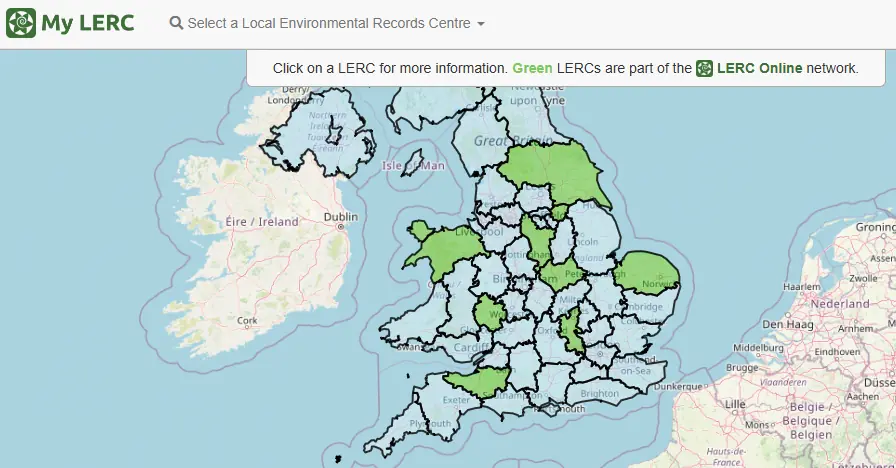 © Cofnod
FAQs - Orca
Can Orca replace Recorder 6?
Orca has been designed from the ground up to store and report on data in a way that is tailored to the way LERCs work. It uses some of the same components that are present in Recorder, such as the UK Species Inventory for species names, and species rules from the NBN Record Cleaner, however we have designed the system to make it easier to use and more customisable than Recorder, improving many aspects such as metadata storage, mapping and reporting. Many current Orca users previously used Recorder 6, and we are experienced in migrating data into Orca. Moving data from Recorder 6 provides an opportunity to improve data quality, using Orca’s import tools to identify issues that might not have been picked up when the records were originally entered. We can provide a full data import service, or you can choose to import data yourself.
Can Orca store spatial data?
Orca can be used to store a range of spatial data such as habitats and sites, which can be managed and combined with species data through our integrated online mapping tool, eMapper.
How is Orca deployed and supported?
Orca is a cloud-based system, allowing multiple tenanted instances. Each instance operates through its own licence, allowing it to be customised to take on organisational branding and configure the way data is stored and reported. Cofnod do not charge for advice on setting up the system, or for feature requests that we consider are of benefit to all Orca users, but we may charge for unique system developments and data transformation work. Orca is continually being developed and supported by Cofnod, as it is our tool for managing species data. As such, when we make changes to the system, all Orca users benefit.
How do I join the Orca community?
Orca is already deployed by a range of LERCs across the UK. These Orca instances are licensed for use on an annual basis. As well as regular contact with Orca users, sometimes using the Orca support module, we offer biannual webinars, informing the Orca community about the latest changes to the system, and tackling joint issues with data management. If you're interested in knowing more about Orca and how it might work for you, please contact us and we can arrange a demonstration of what it can do.
Are there other systems which link to Orca?
Orca comes bundled with eMapper, our online mapping tool, and your own configurable pages on the data request portal My LERC. Orca also links to our other optional systems, including the Online Recording System and Sites Manager.
On the Record
On the Record is our monthly online newsletter. It's full of interesting information about local wildlife recording, including that month's events and what to look out for in our Species Focus feature. Subscribe now to get next month's issue .